
Emergency Chimney Sweep Near Me: What Park Santiago Homeowners Should Do First
If your chimney is actively smoking into the living room or you’ve heard a low roaring sound coming from the flue, searching for a sweep is the wrong first move. Get the fire out, get everyone clear, and only then call for help. Here’s the correct sequence for Park Santiago homeowners, and why getting it out of order can turn a recoverable situation into an expensive one. If you’d rather not work through this on your own, call (855) 957-4437.
Key Takeaways
- Stop using the fireplace first, then call 911 if there’s an active fire or heavy smoke indoors.
- Never open the damper or run a blower to “clear” smoke during a suspected chimney fire.
- A post-fire Level 2 inspection, not a routine sweep, is what tells you whether the flue is still safe.
- Keep every photo and inspection report; that’s what your insurer will ask for.
How Do You Recognize an Active Chimney Fire in Park Santiago?
A chimney fire often sounds like a low rumble, a crackling that won’t stop, or a whooshing noise like a distant train. From inside, you might notice smoke backing into the room, a strong creosote smell, or the firebox glowing hotter than usual. From outside, look for thick black or gray smoke, sparks or flames from the top of the chimney, or a discolored cap.
Many Park Santiago homeowners miss the early signs because a chimney fire can burn quietly in the flue for several minutes before it becomes obvious. In our experience, the tell is usually the sound plus a sudden draft change: the fire pulls harder, then the smoke stops rising the way it normally does. That’s the moment to act.
The correct sequence:
- Get everyone out and call 911. Tell the dispatcher you believe you have a chimney fire, give your address, and say whether the fire is contained to the flue. That last detail helps them send the right equipment.
- Close the firebox doors or glass doors if you have them, and shut the damper only after the fire department advises it.
- Don’t spray water down the flue. A sudden temperature shock can crack a clay liner.
- Wait for the all-clear from the fire department before you use the fireplace again.
Only after the fire is out do you call a sweep for a post-fire inspection. That’s step three, not step one.
What Should You Do When Smoke Rolls Back Into the Room?
Smoke rollback means the flue isn’t drafting properly. The fire is lit, but the smoke is coming into the living space instead of up the chimney. The first thing to do is stop adding fuel and let the fire burn down, then open a nearby window a crack to relieve negative pressure in the room.
Do not run a blower or a whole-house fan. Do not open the damper wide to “clear” the smoke. Those moves can pull more air through the firebox and, in the case of a smoldering chimney fire, feed it oxygen it doesn’t need. We’ve seen homeowners make the smoke worse by trying to force it out.
Common causes of rollback in Park Santiago homes include:
- A cold flue that hasn’t warmed up enough to establish draft.
- A blocked or partially blocked flue from a creosote buildup or a bird nest.
- A chimney that’s too short for the roofline, or a nearby tree or structure causing a downdraft.
- Negative pressure from a kitchen or bath exhaust fan running at the same time.
If rollback happens once and clears when the flue warms up, it’s worth a look but not an emergency. If it keeps happening, that’s a sign your flue needs attention. Call (855) 957-4437 and we’ll schedule an inspection. We answer 24/7.
What Does “Do Not Use the Fireplace” Actually Mean?
When we tell a Park Santiago homeowner not to use the fireplace, we mean no fires, no embers, no paper, no candles in the firebox. We also mean don’t run the blower or open the damper to try to move air. The system is meant to be used as a whole: firebox, damper, flue, cap. A damaged flue doesn’t care that you were only burning a small fire.
A damaged or creosote-loaded flue can fail without warning. If the flue liner has a crack from a prior fire, the next fire can push smoke and carbon monoxide into the walls or attic. That’s not a scare tactic; it’s the reason the fire department and every qualified sweep will tell you the same thing. Carbon monoxide is odorless, so a cracked flue can leak without any visible sign.
In practice, “do not use” means:
- Keep the glass doors closed and latched.
- Don’t light anything in the firebox until an inspection clears it.
- Keep the damper in its normal position unless the fire department told you otherwise.
- Leave the cap and crown alone until a technician looks at them.
If you’re unsure whether your flue is safe, that’s exactly what a standalone inspection is for. We offer chimney sweep and inspection as separate services, so you get an honest condition report before any repair work is discussed.
What About Visible Exterior Damage After a Storm?
If a windstorm knocks off your cap or you see cracked masonry, a leaning crown, or missing mortar joints on the chimney stack, keep everyone away from the fireplace until someone looks at it. A loose cap or a chunk of crown can fall without warning. Don’t climb up to check it yourself.
Common post-storm damage in Park Santiago includes:
- Displaced or missing chimney cap & crown components.
- Cracked mortar joints on the exterior stack.
- Water intrusion where the flashing meets the roofline.
- Debris or a bird nest blocking the flue.
After a storm, the priority is keeping the flue dry and clear. A damaged crown lets water into the masonry, and water does slow, quiet damage to the firebox and flue over time. We use Chimney Sweep Park Santiago as the starting point for that kind of full-system assessment, since the damage usually involves more than one part of the chimney.
If you also see smoke staining around the firebox or the damper is sticking, that’s a fireplace repair conversation, and it’s worth handling at the same visit.
What Does a Post-Fire Chimney Inspection Cover?
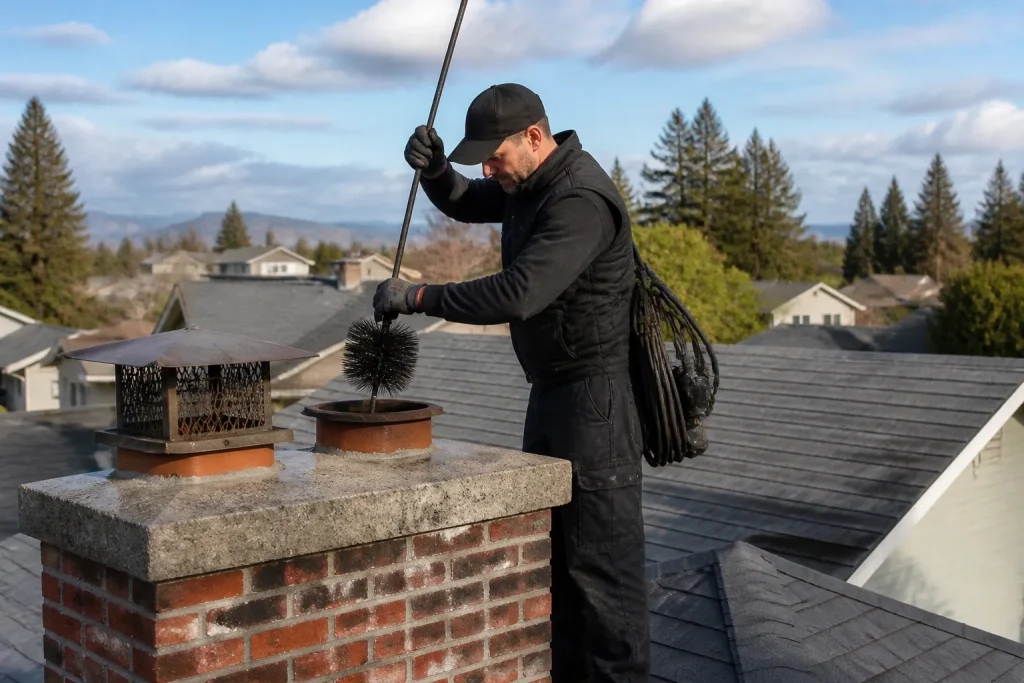
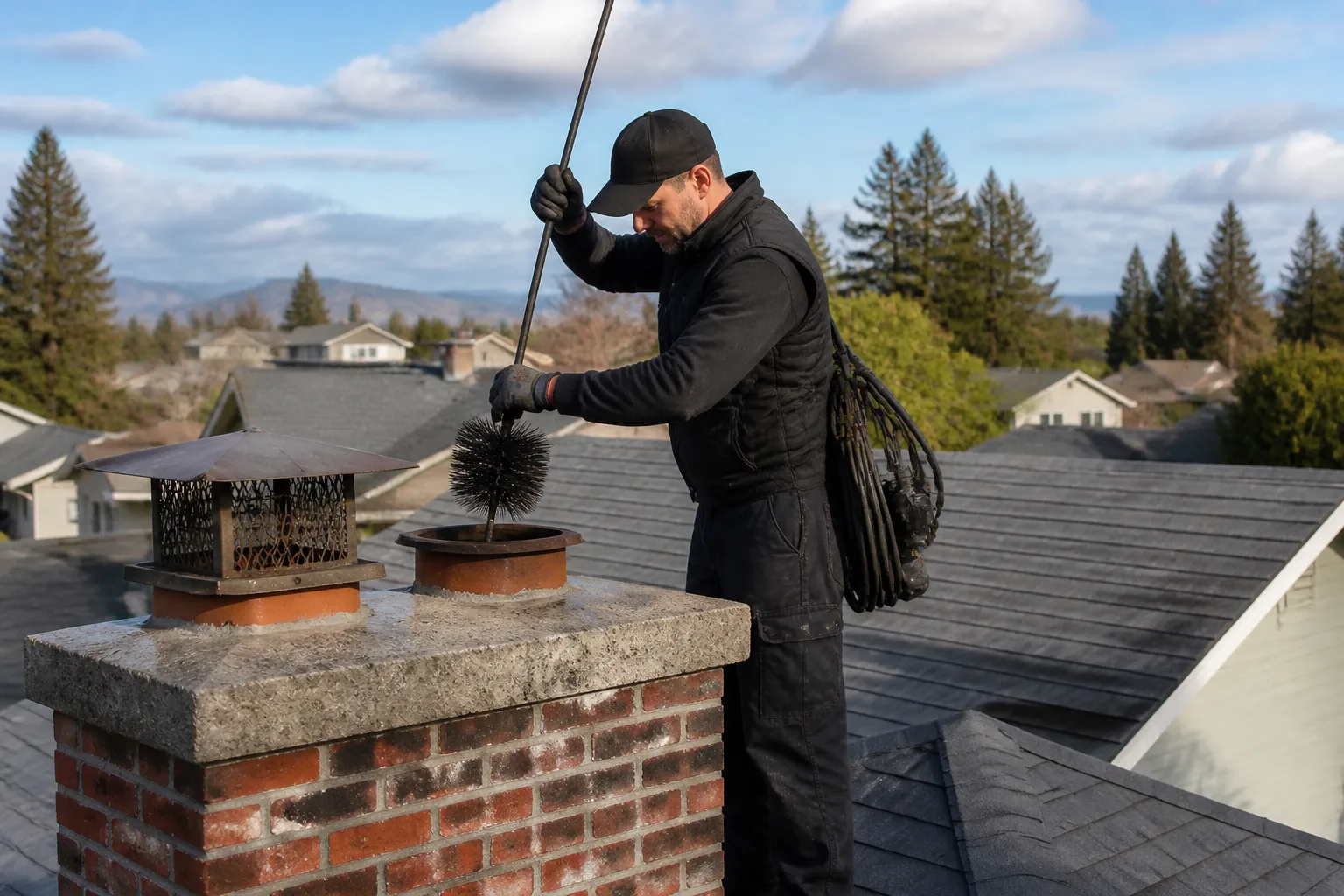
A post-fire inspection is a Level 2 inspection, and it is not the same as a routine sweep. A sweep cleans the flue. A Level 2 inspection examines the entire system, including the flue interior, the firebox, the damper, the smoke chamber, the crown, the cap and the flashing, usually with a camera.
That distinction matters for two reasons. First, a fire can damage a flue in ways you can’t see from the firebox. Second, your insurer will typically want documentation of the condition before and after. A camera inspection with photos gives you a record you can hand to an adjuster.
What we look for during a post-fire inspection:
- Cracks or gaps in the flue liner, clay or stainless.
- Warped or damaged dampers.
- Creosote glaze left behind in the smoke chamber.
- Heat damage to the firebox or the masonry around it.
- Cap and crown integrity.
If the liner is compromised, we can often restore it with HeatShield ceramic resurfacing rather than a full replacement. When a full liner is the right call, we install DuraFlex stainless systems. Those are professional-grade products most general handymen don’t stock, and they’re spec’d to the flue rather than pulled off a shelf. An estimate is free, and we’ll show you the camera footage before recommending anything.
The Bottom Line
Chimney emergencies have an order: stop using the fireplace, call 911 if there’s an active fire or heavy smoke indoors, wait for the all-clear, then book an inspection. Opening the damper or running a blower to clear smoke can make things worse, and a post-fire inspection is not the same as a sweep. Keep every photo and report; that’s your documentation for insurance and for the next homeowner.
If you’re in Park Santiago and need help, Chimney Sweep Park Santiago offers free estimates. Call (855) 957-4437. We answer 24/7. Fast dispatch from 7am to 7pm, Sunday through Friday. Our technicians have up to 8 years of experience, and we work on the whole chimney system, not just the flue.
Frequently Asked Questions
There’s no separate emergency rate; the price is set per job by the written estimate, and we don’t add a surcharge for a same-day appointment. A routine sweep is usually less than a post-fire Level 2 inspection because the inspection takes longer and includes camera work and a written report. Call (855) 957-4437 for an exact quote. Estimates are free.
Not always. A cracked clay liner can often be restored with HeatShield ceramic resurfacing, which is less invasive and less expensive than full replacement. A stainless DuraFlex liner is the right choice when the existing flue is too damaged to resurface. We won’t recommend either until you’ve seen the camera footage. Call (855) 957-4437 to schedule the inspection.
Most fireplaces used regularly should be swept once a year, or whenever creosote buildup reaches about an eighth of an inch. If you burn often, especially with unseasoned wood, you may need it sooner. An annual inspection catches problems before they turn into an emergency. Call (855) 957-4437 to book one.
A damaged flue can leak smoke and carbon monoxide into the walls or attic without any obvious sign, and the next fire can make it worse. Skipping the inspection also leaves you without documentation if you file an insurance claim. A post-fire Level 2 inspection is the record you’ll want. Call (855) 957-4437 to get it scheduled.
Written by the team at Chimney Sweep Park Santiago.
Need Chimney Cleaning Help?
Call Chimney Sweep Park Santiago - the local pro we connect you with is licensed and insured, with free written estimates in Park Santiago.
(855) 957-4437