
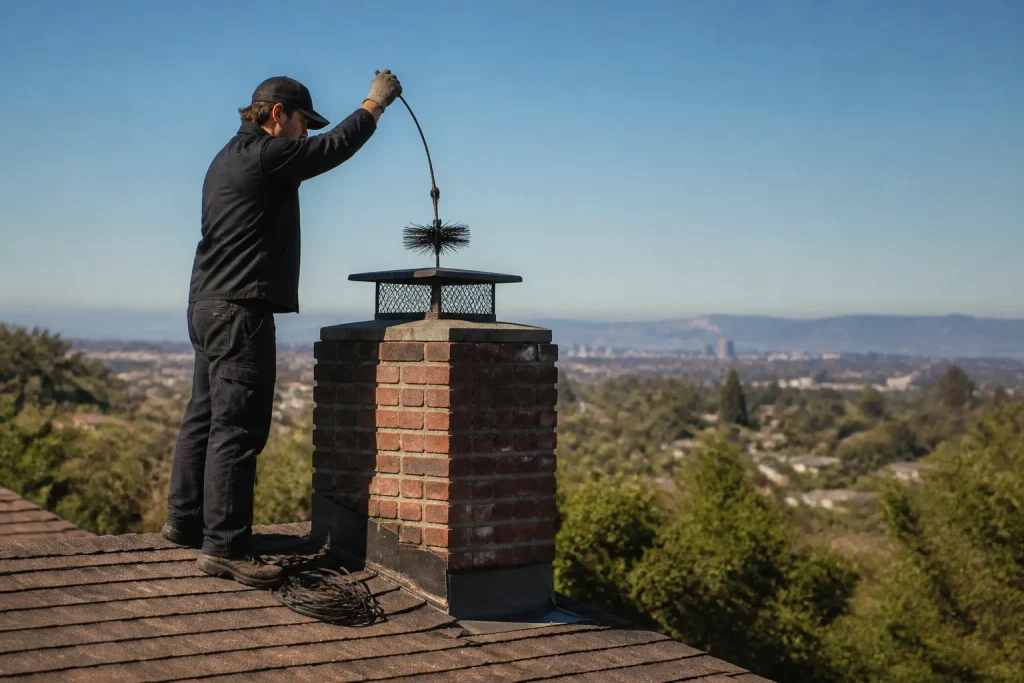
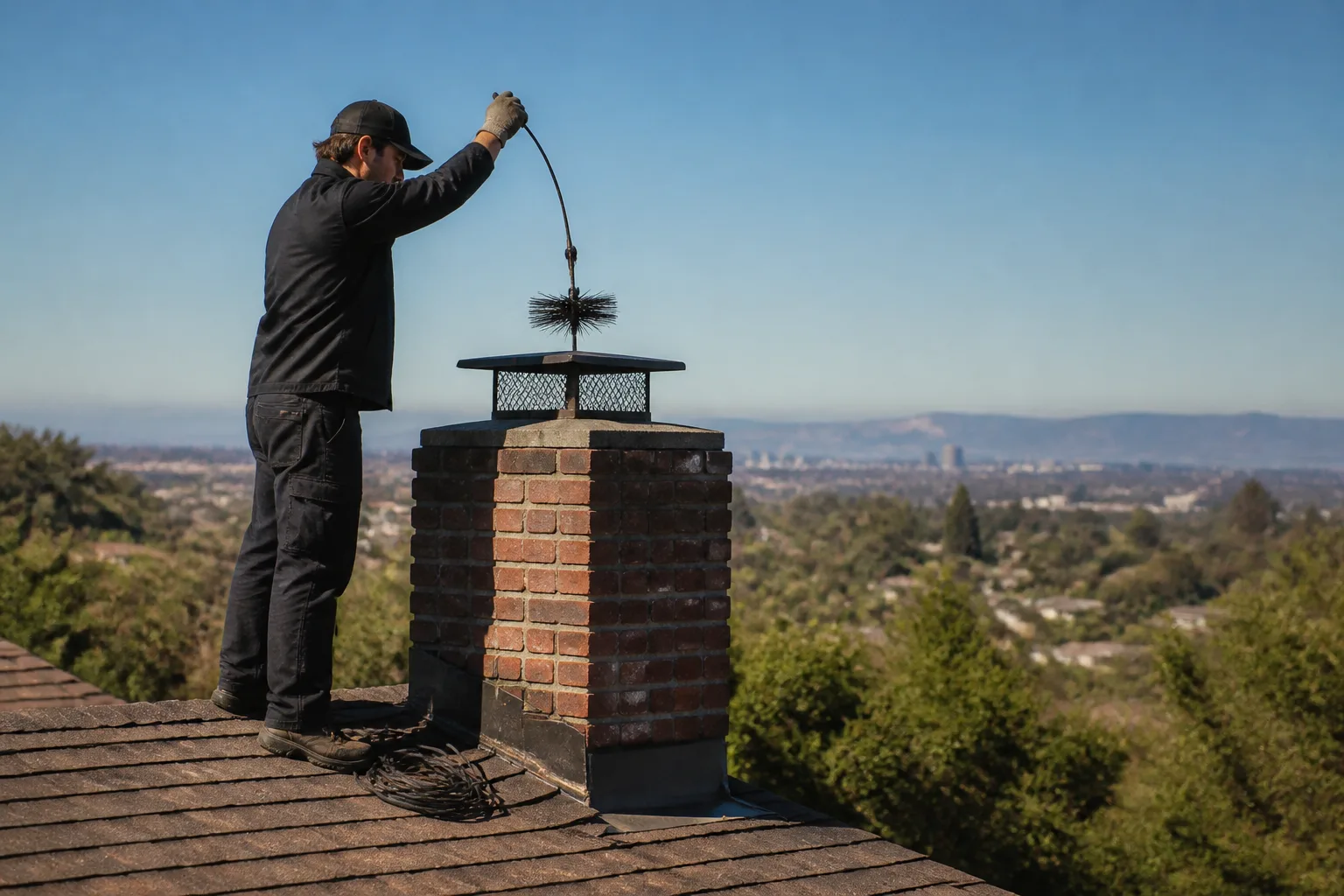
How to Choose the Right Chimney Cleaning Company in Park Santiago
There’s no state license specifically for chimney sweeps in California, which means the barrier to advertising chimney services is close to zero. Anyone with a brush, a ladder, and a magnetic sign can call themselves a chimney company. The credentials that actually separate a trained specialist from a generalist are industry-issued, and they’re easy to check once you know what to look for. This guide walks you through the vetting process for Park Santiago homeowners so you can book with confidence instead of hope.
If you’d rather skip the research and talk to a chimney specialist directly, call (855) 957-4437 for a free estimate.
Why chimney credentials in Park Santiago are harder to read than they look
Most home service trades in California require a state contractor license, and homeowners have learned to ask for a license number before they book. Chimney work sits in a strange gap. Sweeping and inspection aren’t licensed activities at the state level, and that means the credential most worth looking for isn’t issued by the state at all. It’s issued by the industry.
In our experience, the companies that invest in real credentials are usually the ones that also carry proper equipment, ask the right questions, and hand you a written report. The ones that don’t tend to be vague on the phone, quote a flat price before they’ve seen anything, and show up with gear that looks a lot like what’s in your garage.
The gap matters most with older masonry systems, which are common in Park Santiago. A 1950s brick chimney and a modern prefab unit need different tools, different camera setups, and different knowledge of how the flue is built. A company that treats them the same is telling you something.
So the screening job isn’t about finding the cheapest quote. It’s about finding out, quickly and concretely, whether the person on the phone knows the difference between a flue and a firebox. The sections below give you the checks to run.
What does CSIA certification actually mean, and how do you verify it?
The CSIA Certified Chimney Sweep credential is issued by the Chimney Safety Institute of America, and it’s the single most reliable proxy for technical competence in this trade. To earn it, a technician has to pass a written exam covering chimney construction, venting, draft, combustion, and the codes that govern how a flue is supposed to work. They also have to hold current industry standards knowledge and renew on a cycle that requires continuing education. It is not a certificate you buy online.
Here’s how to verify it in about ninety seconds:
- Ask the company for the certified technician’s CSIA number before you book.
- Go to the CSIA website and use their locator to search by ZIP code or by the technician’s name and number.
- Confirm the certification is current, not lapsed.
- Ask whether the certified technician will actually be the one doing the work, or whether uncertified helpers will handle it.
A company that hesitates on that last question is worth a second thought. Technical certification is held by an individual, not by a company, so a firm with one certified technician and a rotating crew of helpers is a different thing from a firm where the certified person does the sweep and inspection themselves.
Some companies also hold NFI qualification (National Fireplace Institute), which covers fireplace and venting installation knowledge. It’s a useful second signal, especially if you’re dealing with gas appliances or a prefab unit. Neither credential replaces a current business license, but together they tell you the company takes the trade seriously.
What a legitimate pre-service conversation should sound like
Before a company quotes you a price, they should ask you three things: what type of fireplace or appliance you have, when it was last serviced, and what fuel it burns. A specialist asks because each answer changes the tools, the time, and sometimes whether it’s a sweep job at all.
A gas fireplace with a prefab insert is a different appointment from a wood-burning masonry fireplace, and the inspection scope isn’t identical. A wood stove with a baffle needs to be disassembled before the flue can be brushed properly. A pellet appliance needs its own approach. If the person on the phone doesn’t ask, they’re either going to figure it out on arrival (bad) or they’re going to brush whatever they can reach and call it done (worse).
A few more signals that the conversation is going well:
- They ask whether you’ve noticed smoke coming back into the room or a smell when the fireplace isn’t in use.
- They ask about the chimney’s exterior condition or whether you’ve seen crumbling mortar at the crown.
- They explain what an inspection level means (Level 1, 2, or 3) and which one your situation calls for.
- They quote a range and say the final price depends on what they find, rather than a flat number that turns out to be a deposit.
A company that skips these questions is signaling that it sells sweeps, not chimney service. Those aren’t the same product.
What equipment should a professional sweep bring to your Park Santiago home?
The equipment a company brings is the most visible evidence of how they approach the work. A professional sweep shows up with three things that most generalists simply don’t carry: a commercial-grade HEPA vacuum, a camera inspection system, and properly sized rods and brushes.
The HEPA vacuum matters more than people realize. A shop-vac from the hardware store will blow fine soot back into the room instead of capturing it, and the residue settles on every surface. A commercial HEPA unit is designed for the particle size you’re dealing with. If a company arrives with a residential vacuum, they’ve already told you how much dust they plan to leave behind.
Camera inspection is the second tell. A company that does camera work can show you what the flue looks like at the top, at the smoke shelf, and at any offset or transition. A company that doesn’t has nothing to show you but its word. In our experience, the photo report is the difference between a recommendation you can verify and one you have to take on faith.
The third is brush and rod sizing. Chimney brushes come in different materials and diameters because flues come in different sizes and linings. A stainless liner needs a different brush than an unlined clay tile flue. A company that carries one brush is a company that brushes one kind of chimney.
Masonry or prefab: the Park Santiago screening question worth asking
Park Santiago has a mix of older masonry chimneys and newer prefab units, and the two require different knowledge. A masonry chimney is a built structure with a flue, a smoke chamber, a crown, and a cap, and its failure points are usually in the masonry and the joints. A prefab unit is a manufactured system with a specific liner, specific clearances, and components that have to be replaced with matching parts. Treating one like the other is a real problem.
So ask, directly, on the phone: “Do you work on both masonry and prefab chimneys?” A specialist answers without hesitation and usually asks which type you have. A generalist either says “sure” and moves on, or gives you a vague answer that suggests they’ve never had to think about it.
The follow-up question, if you want to press harder: “What’s your experience with each?” You’re not looking for a number. You’re listening for whether they can describe the difference in tools or inspection approach. The sweep and inspection work on a masonry system and a prefab appliance differ in ways a trained technician can articulate in plain language and a generalist cannot.
This is why we work on the whole chimney system, not just the flue. The condition of the crown, the cap, the firebox, and the mortar joints all affect how the system performs, and a company that only knows how to sweep will miss what’s happening above the flue.
Three questions to ask before you book, and what the answers tell you
You can screen most chimney companies with three questions. Each one produces an answer that either sounds like a specialist or doesn’t.
1. “What’s your CSIA certification number?”
A company with a certified technician has the number ready. A company without one will talk about how long they’ve been in business, how many chimneys they’ve swept, or how they’re “fully insured” without answering the question. Verify the number on the CSIA site.
2. “What level of inspection do you offer, and is it included or separate?”
A Level 1 inspection covers the readily accessible portions of the chimney and is appropriate when conditions haven’t changed. A Level 2 includes a camera scan and is called for after a chimney fire, after a change in the appliance, or when you’ve moved into a new home. A Level 3 involves accessing concealed areas. A specialist can explain the difference and tell you which one you need. If the answer is “we’ll take a look while we sweep,” you’re getting a visual once-over, not an inspection. We offer inspections as a standalone service specifically so the report you get is honest and not just a step toward a sales pitch.
3. “What happens if the sweep reveals a defect?”
The right answer is that you get a written description of the defect, a photo of it, and options that include “monitor it and revisit next year.” The wrong answer is an immediate push to schedule liner replacement before they leave the driveway. A company that can say “that crack is fine for now, check it again in a couple of years” is a company you can probably trust with the bigger work. We don’t recommend a repair we can’t show you on camera.
One light note: if the technician delivers a lecture longer than a safety briefing and shorter than a documentary, you’ve probably found a good one. The talkers usually know their trade.
When to call a pro, and what to expect from the visit
A routine sweep is once a year for a fireplace you use regularly, and more often if you burn heavily or the wood is green. An inspection is worth calling for whenever you’ve moved into a Park Santiago home and don’t know the last service date, or after any chimney fire, even a small one. Smoke backing into the room, a strong creosote smell when the fireplace is off, a visible crack in the firebox, or missing mortar at the crown are all reasons to book before the next burn.
On the day, expect a specialist to lay down drop cloths, set up the vacuum before touching anything, and do the inspection before the sweep on a first-time visit. Expect a written report and photos if there’s anything to see. Expect a price on a written estimate, not a number quoted before the work was scoped.
For the full range of services a specialist handles in one appointment, here’s where to look: a chimney sweep clears the flue; a standalone inspection gives you the condition report; fireplace repair addresses the firebox and damper; and chimney cap & crown work keeps water and animals out of the flue. If you’re searching for Chimney Sweep Park Santiago, that’s the specialist we are.
The Bottom Line
Choosing a chimney company in Park Santiago comes down to a short checklist: a verifiable CSIA certification, a camera inspection you can see, a real pre-service conversation about your fireplace and fuel, and a written estimate that follows the scope. If a company can answer the three questions above without dodging, you’re probably in good hands. If it can’t, keep calling.
If you’d rather skip the vetting and talk to a chimney specialist now, Chimney Sweep Park Santiago offers free estimates. Call (855) 957-4437. We answer 24/7. Fast dispatch from 7am to 7pm, Sunday through Friday.
Frequently Asked Questions
Ask for the technician’s CSIA number before you book, then check it on the CSIA website’s locator. Certification is held by an individual technician, not a company, so confirm the certified person will be doing the work. If the number can’t be produced or doesn’t check out, keep looking.
No. Chimney sweeping and inspection aren’t state-licensed activities in California, which is why industry credentials like CSIA certification carry so much weight. A business license and insurance are still worth confirming, but they don’t prove technical training on their own. Call (855) 957-4437 for an exact quote on your chimney.
A sweep is the cleaning of the flue. An inspection is an assessment of the chimney’s condition, ranging from a visual Level 1 up to a Level 2 with camera scan. A sweep without an inspection tells you the flue is clean, not that it’s sound. We offer inspections as a standalone service so you can get the condition report without committing to repairs. Call (855) 957-4437 for an exact quote.
A commercial-grade HEPA vacuum, a camera inspection system, and properly sized rods and brushes for your flue type. If they arrive with a residential shop-vac and one brush, they’re not equipped for professional chimney work. If you’re in Park Santiago and want an estimate, call (855) 957-4437 – estimates are free.
Written by the team at Chimney Sweep Park Santiago.
Need Chimney Cleaning Help?
Call Chimney Sweep Park Santiago - the local pro we connect you with is licensed and insured, with free written estimates in Park Santiago.
(855) 957-4437