
Top Signs You Need Chimney Cleaning Service – Don’t Ignore These
Most homeowners assume they’ll smell trouble before it becomes dangerous. In our experience, that’s exactly backwards. A strong chimney odor is a mid-stage warning, not an early one. By the time creosote makes itself known in the room, the buildup has usually moved past what a standard brush sweep can fully clear. The signs worth acting on show up earlier and quieter: a fire that’s slower to catch, a draft that feels a little weak, a faint white bloom on the masonry. This guide covers what to watch for in Park Santiago. If you’d rather have a specialist look than climb up yourself, call (855) 957-4437 and we’ll set up an inspection.
The Sign That Matters Most: Creosote Stage, Not Just Creosote
Chimney fires are driven by creosote, and creosote builds in three stages that behave very differently. Knowing which stage you’re at determines what the cleaning involves and how soon it should happen. A chimney with light stage 1 soot is a routine job. A chimney with stage 3 glazed creosote is a different category of problem entirely.
- Stage 1 – soot and light flaky creosote. This is the thin, dusty, easy-to-brush layer that forms after a normal season of fires. A standard sweep handles it cleanly.
- Stage 2 – flaky, brittle, crusted deposits. The texture turns crunchy and clings harder to the flue walls. Brushing alone often leaves residue behind, so the sweep needs to be more thorough and the inspection matters more.
- Stage 3 – glazed creosote. This is the dangerous one. It looks like a hard, shiny, tar-like coating that seals itself to the flue. It’s the byproduct of restricted air or burning less-than-dry wood, and it can’t be brushed off. It requires a chemical treatment or, in bad cases, a restoration product like HeatShield or a DuraFlex liner to bring the flue back to spec.
Here’s the part that catches people out. Stage 3 buildup can sit in a chimney with almost no obvious sign inside your living room, right up until the moment it ignites. That’s why relying on a smell or a symptom to decide when to call leaves most chimneys under-maintained. The stage of the creosote, plus the condition of the flue, is what tells us what method a Park Santiago cleaning actually needs.
The Early-Stage Indicators Most Homeowners Dismiss
Before buildup is visible to the eye, the fire itself starts telling you something. These are the signs you’ll notice from the couch, not the roof, and they’re routinely written off as “the wood” or “the weather.”
- Fires start slower than they used to. If a fire that used to catch easily takes more kindling and patience, the flue is likely restricted by buildup narrowing the path for smoke and air.
- You’re adjusting the fire more often. Constantly fiddling with the damper, door, or logs to keep the fire steady points to a draft problem. The chimney can’t pull air reliably, so you compensate.
- The draft feels weaker. A fire that smolders instead of roaring, or smoke that lingers instead of lifting, signals reduced drawing power. Buildup, a partially blocked flue, or a damper issue can all cause it.
- Smoke rolls into the room when you light up. A small puff at startup is common, but regular backdraft means the flue isn’t venting the way it should.
None of these are emergencies on their own. Treated together, though, they’re the early indicators a specialist looks for, and they’re why we recommend an inspection before a chimney starts failing in obvious ways. A short conversation about how your fire behaves tells us a lot about what’s happening inside the flue in Park Santiago.
Structural Warning Signs That Look Unrelated to Cleaning
Some of the strongest signals aren’t about soot at all. They’re about moisture and the condition of the system around the flue. Homeowners read them as cosmetic quirks, but each one points to a specific problem worth diagnosing.
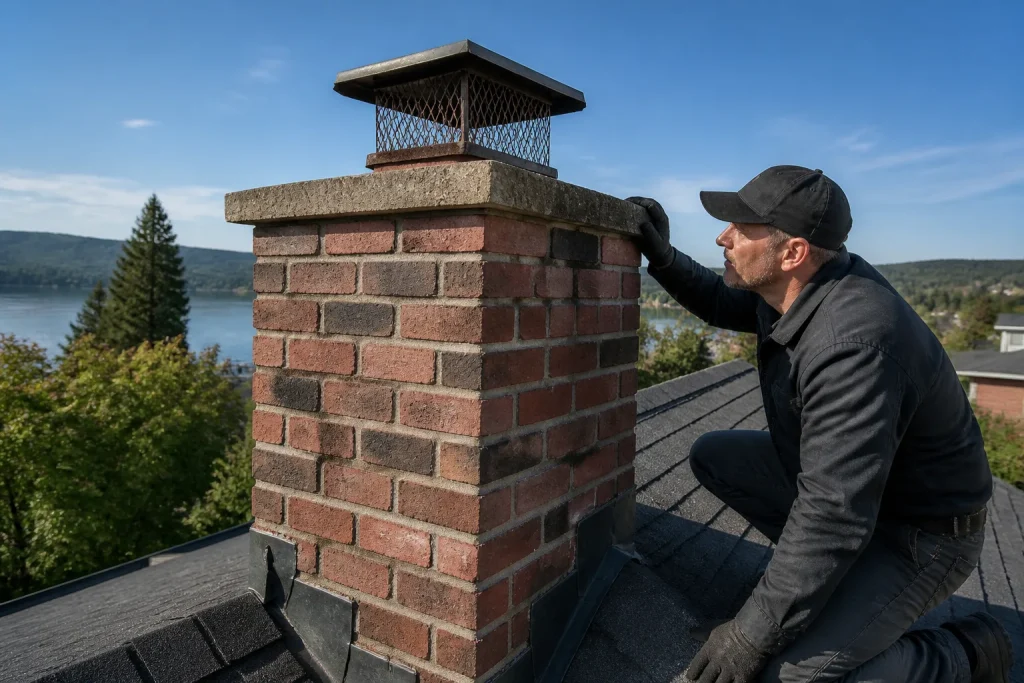
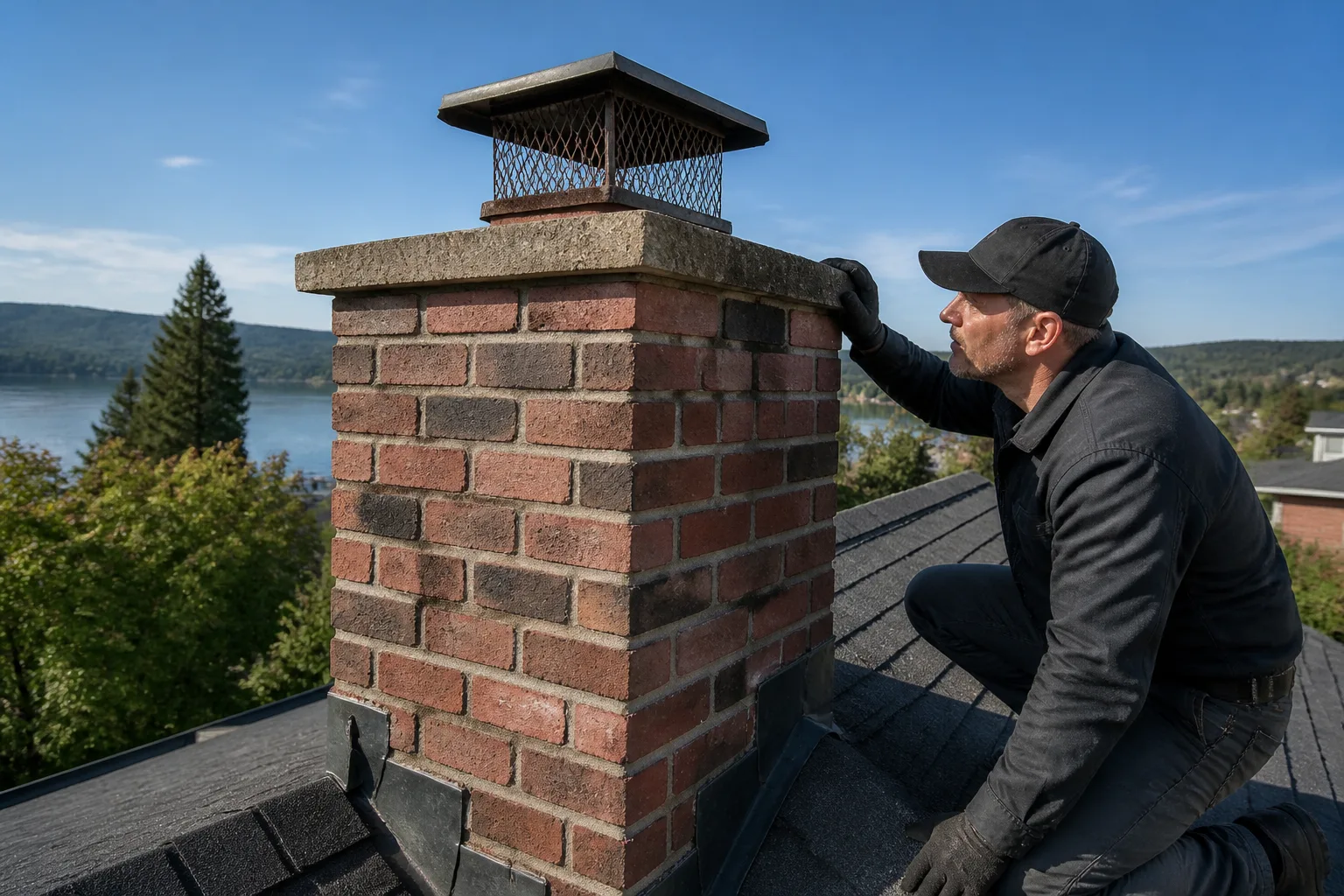
- White staining on the exterior masonry (efflorescence). This chalky bloom is moisture migrating through the brick and leaving mineral deposits behind as it dries. It usually means water is getting into the chimney somewhere, often through a failing crown or unsealed cap. That moisture accelerates creosote problems and masonry damage.
- Rust stains around the damper. Rust in the damper assembly is a strong indicator of chronic moisture inside the firebox and flue. A leaking crown or a missing cap can let water run straight in, and rust means it’s been happening a while.
- White staining on the firebox interior. Different from exterior efflorescence, staining inside the firebox often points to moisture reacting with the masonry, or to an aggressive burning pattern that’s wearing the firebox down.
When we see these, we don’t just sweep and leave. We trace the moisture source because cleaning a wet chimney is a temporary fix. We work with professional-grade components to correct these problems, using products like Olympia Chimney caps and crowns or Famco masonry materials to get the system sealed and sound again. That’s part of how we work on the whole chimney system in Park Santiago, not just the flue.
Light Users: Why “I Barely Use the Fireplace” Isn’t a Pass
A fireplace that gets lit a handful of times a year doesn’t get a pass on maintenance. Even a rarely used chimney in Park Santiago accumulates the exact conditions that cause problems, just from different sources than heavy burning.
The mild, damp winters here do a lot of quiet damage. Moisture works its way into masonry and flue liners, corroding metal liners and weakening mortar joints over time. This happens whether or not you ever light a fire. Meanwhile, animals find uncapped chimneys attractive, and birds, squirrels, and other wildlife leave nests and debris that restrict the flue and create a fire hazard. A forgotten fireplace with a blocked flue is a genuine risk the first time someone decides to use it.
For light users, a standalone inspection is the sensible move. It gives you an honest condition report before you commit to any repairs, and it catches the moisture and debris problems that fuel use alone won’t reveal. We offer chimney sweep and inspection as separate services because you should be able to know the condition of your chimney without being pushed into work you don’t need. In our experience, most lightly used chimneys need exactly what the report says and nothing more.
Smoke Backdraft or Odd Odor After a Storm
A sudden backdraft or a strange smell after wind and rain is a specific diagnostic signal, not a one-off annoyance to shrug past. It usually means the part of the system that keeps weather and downdrafts out has been compromised. The most common culprits are the cap, the crown, or the damper.
A damaged cap lets wind drive smoke back down the flue and lets rain and debris in. A cracked crown lets water into the masonry below. A sticking or warped damper interferes with the draw. Any of these can turn a storm into a lasting problem, and the odor that follows is often the first thing you notice. When a backdraft shows up after a storm and keeps happening, that’s the moment to have it looked at. We handle chimney cap & crown repair and damper work as part of the same visit, so a storm issue gets diagnosed and corrected in one go rather than left to become a moisture problem. A single mild puff during a storm is nothing to worry about. A pattern of backdrafts is telling you something needs attention.
When to Call a Pro
Some things are worth checking yourself: the damper operation, whether birds have moved in, the condition of the cap from the ground. But anything involving the flue interior, creosote stage, masonry moisture, or a suspected liner problem is a job for someone who works on chimneys specifically. Creosote removal and structural diagnosis carry real risk, and the wrong cleaning method on stage 3 buildup can do more harm than good.
A good rule: if you’ve noticed two or more of the signs above, or you can’t remember the last time the chimney was inspected, get it checked. Our technicians have up to 8 years of experience diagnosing exactly these conditions. Related services in Park Santiago: chimney sweep and inspection, fireplace repair, and cap and crown work. Or start here at Chimney Sweep Park Santiago to see the full range.
The Bottom Line
The signs worth acting on are rarely the dramatic ones. A fire that’s gotten fussy, a faint draft change, white staining on the brick, a backdraft after a storm: these point to the conditions that matter long before a chimney smell or a visible mess appears. The stage of creosote buildup, plus moisture and debris, is what determines what service you actually need. If you’re in Park Santiago and need help, Chimney Sweep Park Santiago offers free estimates. Call (855) 957-4437. We answer 24/7. Fast dispatch from 7am to 7pm, Sunday through Friday.
Frequently Asked Questions
Most chimneys should be inspected annually and cleaned when the inspection shows buildup that warrants it. Heavy users may need cleaning more often, and light users still need the yearly inspection to catch moisture and animal debris. Call (855) 957-4437 to book an inspection.
You can catch the early indicators, yes: slower fire starts, more frequent adjustments, a weaker draft, and white staining on the masonry. But you can’t reliably judge creosote stage from the ground. That takes a specialist looking at the flue. Call (855) 957-4437 for a free estimate.
Stage 1 soot brushes off. Stage 2 crusted deposits need a more thorough sweep and inspection. Stage 3 glazed creosote can’t be brushed and needs chemical treatment or a liner restoration like HeatShield or DuraFlex. The stage sets the method. Call (855) 957-4437 to find out which stage you’re at.
Yes, in the sense that an annual inspection is still necessary. A rarely used chimney in Park Santiago still collects moisture damage and animal debris that a sweep and inspection catch. Call (855) 957-4437 for a free estimate.
Written by the team at Chimney Sweep Park Santiago.
Need Chimney Cleaning Help?
Call Chimney Sweep Park Santiago - the local pro we connect you with is licensed and insured, with free written estimates in Park Santiago.
(855) 957-4437